Why Your Everyday Services Requires More ID Than Your Ballot

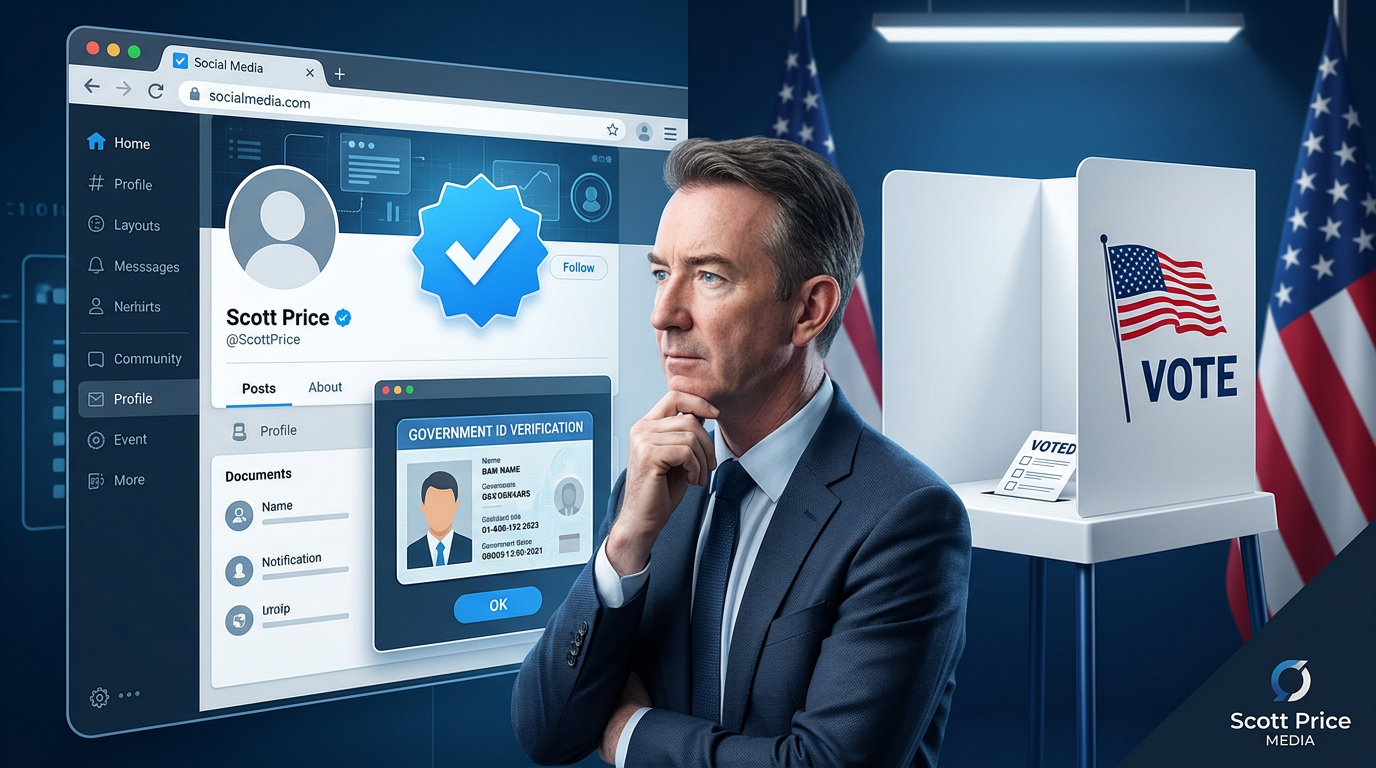
In the digital age, we have become accustomed to the “Verification Era.” Whether it is a blue checkmark on social media or a security check for a bank account, proving who you are is a fundamental part of modern life. However, a growing debate is centered on a perceived inconsistency in how we verify identity for everyday services versus the most fundamental right in a democracy which is voting.
For Scott Price Media, we are exploring the intersection of security, identity, and the varying requirements that govern our lives.
The Social Media Standard
If you want that coveted blue checkmark next to your name on X (formerly Twitter) or Meta, the process is clear. To prevent impersonation and ensure platform integrity, users must upload a government-issued ID. The platforms argue that this is a necessary safeguard to maintain a “trustworthy” environment. Without it, the digital identity is unverified.
The Local Reality: Steve Caporizzo and the Cable Bill
A recent experience shared by Steve Caporizzo highlights how deep these requirements go in the private sector. Steve attempted to change the services on his Spectrum cable bill which was an account originally in his wife’s name. Despite the helpful customer service, the “Transfer of Ownership” required him to provide a government-issued ID to prove his identity.
As Steve noted on social media: “Just to change cable and yet there are some states in this country that don’t require any ID to vote… Is this crazy or is it me?”
The Voting Variance
The crux of the debate lies in the legal landscape of the United States. Currently, the requirements to cast a ballot vary wildly by state:
- Strict Photo ID States: Require a government-issued photo ID; voters without one must often cast a provisional ballot and return later with proof.
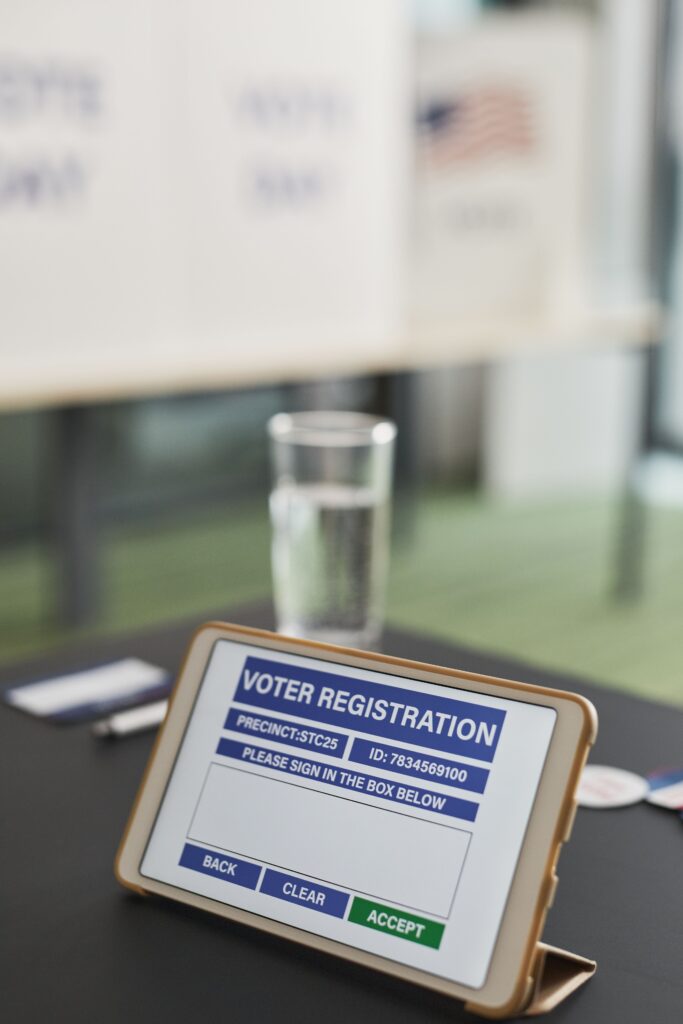
- Non-Documentary States: In several states, no document is required to vote at the polls. Instead, identity is verified through methods like signature matching or providing personal information that matches voter registration records.
The Comparison: Security vs. Accessibility
The “Identity Paradox” arises when we look at other heavily regulated or even mundane activities that mandate government identification:
- Firearm Purchases: Federal law requires a government-issued photo ID to purchase a firearm from a licensed dealer.
- Air Travel: The TSA requires valid identification to board a commercial aircraft.
- Financial Services: Opening a bank account or cashing a check almost universally requires a state ID or passport to comply with “Know Your Customer” (KYC) laws.
- Age-Restricted Goods: Purchasing alcohol, tobacco, or even certain over-the-counter medications requires proof of age via ID.
An Unbiased Perspective
Those who support minimal ID requirements for voting argue that the “right to vote” is a constitutional pillar that should not be hindered by the cost or administrative burden of obtaining an ID, which they claim can disenfranchise marginalized groups.
Conversely, those who point out the “hypocrisy” argue that if society deems identity verification essential for social media status, cable bills, and airline travel, it should be even more critical for the security of an election. The argument is simple. If we secure our cable accounts with government ID, should we not secure our democracy with the same standard?
As we navigate an increasingly verified world, the question remains: is the lack of a universal ID standard for voting a necessary protection of civil rights, or a glaring inconsistency in a high-security society?
What are your thoughts? Is the requirement for ID in everyday life making the voting process look outdated, or are these two worlds fundamentally incomparable?